
Why Sherlock Holmes Was Rarely Wrong
And Why Most People Usually Are


Most people spent today surrounded by evidence and remained impressively uninformed.
They saw facial expressions.
They heard tone shifts.
They noticed hesitations.
They observed decisions.
Then they converted all of it into conclusions with remarkable speed and varying levels of success.
Usually the conclusion arrived first.
The evidence was invited later.
Humanity remains committed to this procedure despite its performance record.
The problem is not intelligence.
The problem is premature certainty.
A conclusion is comforting.
Evidence is work.
The brain has expressed clear preferences on the matter.
🎭◦◦◦📃◦◦◦🎭
A Practical Demonstration
A man enters a room.
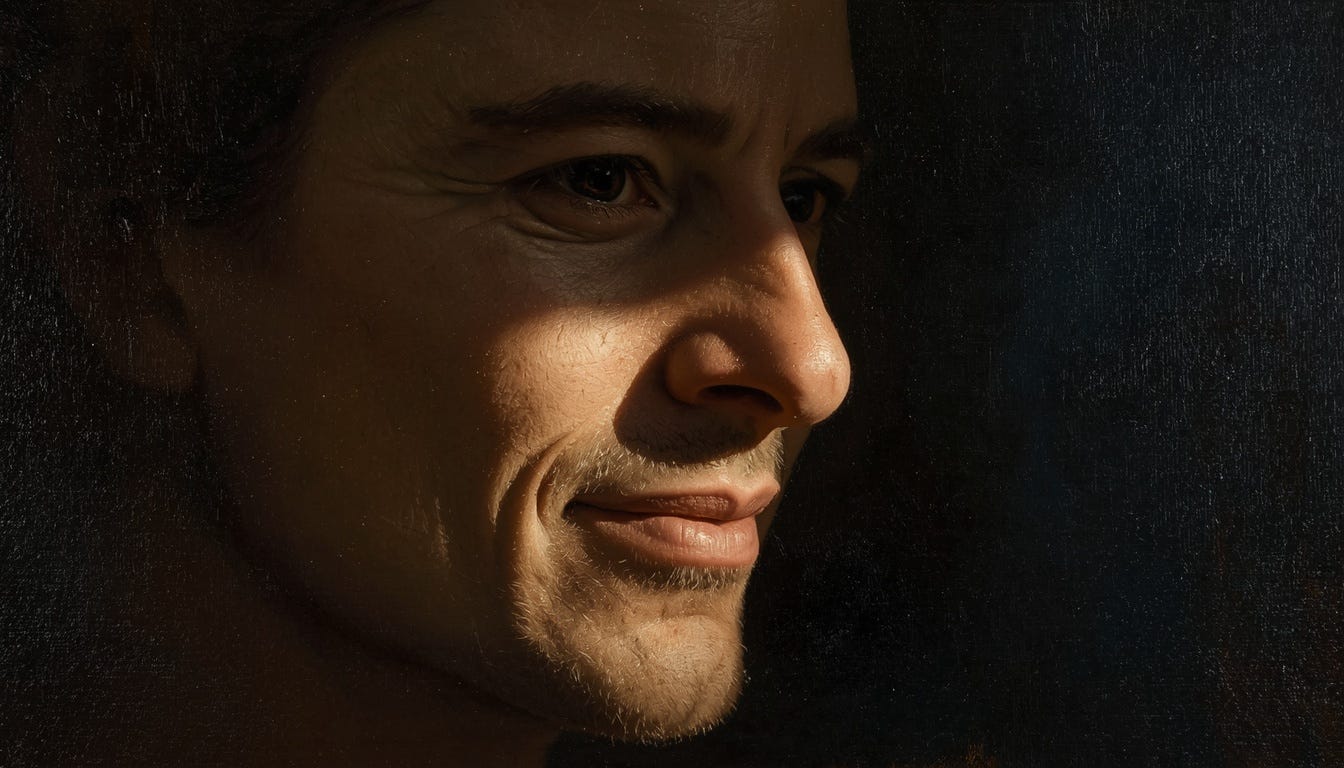
He smiles.
For a fraction of a second, one corner of his mouth rises slightly higher than the other.
Nothing dramatic occurred.
Most people would process the event in two seconds and continue with their day.
Let us commit the administrative error of looking more closely.
Observation Layer
What do we actually know?
Not what we think.
Not what we feel.
Not what seems likely.
What is visible?
We observed:
A man entered the room.
He smiled.
The smile was asymmetrical.
One corner of the mouth rose slightly higher than the other.
The expression appeared briefly.
That is the evidence.
Nothing more.
Already the brain is filing unauthorized paperwork.
It would like to conclude that the man is confident.
Or arrogant.
Or amused.
Or friendly.
The evidence has approved none of these requests.
Unknown Layer
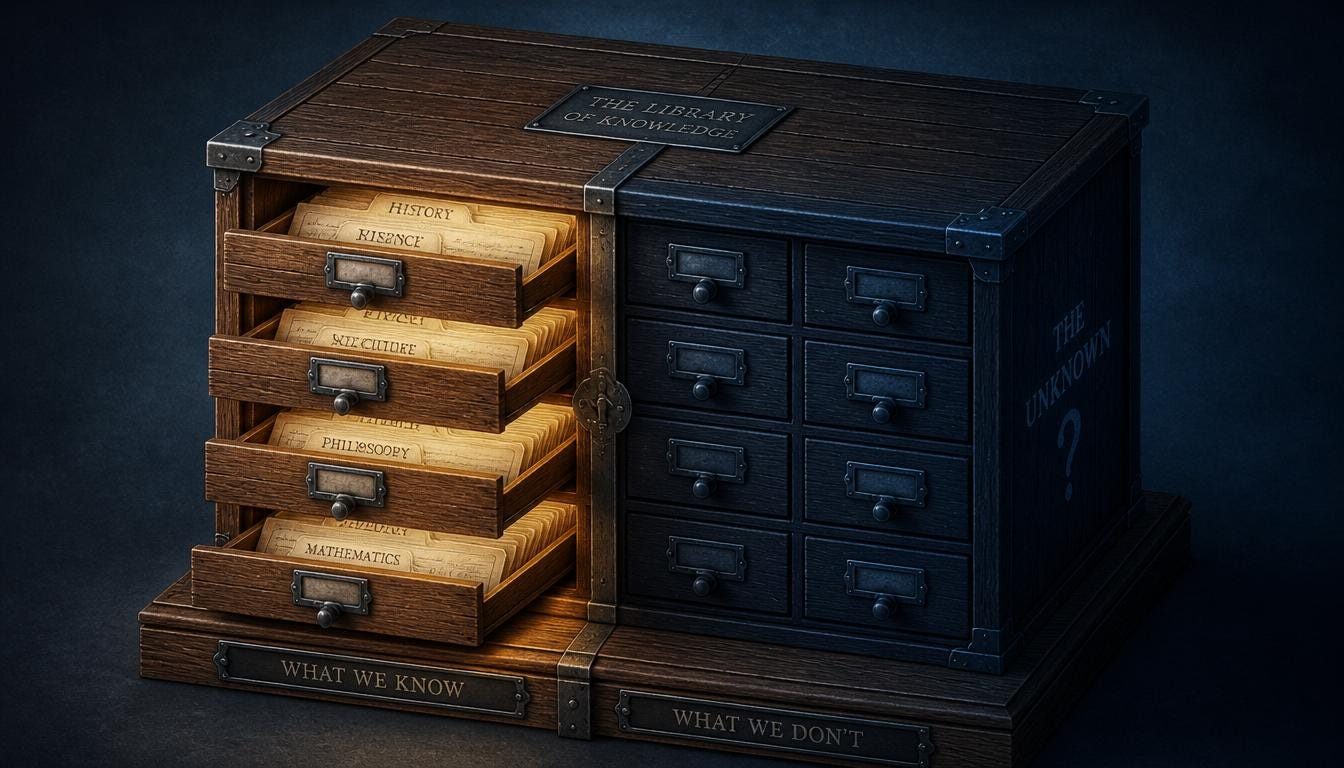
What do we not know?
We do not know:
What he is thinking.
What he is feeling.
Why he smiled.
Whether the expression was intentional.
Whether it relates to anyone in the room.
These are not observations.
They are unanswered questions.
Many analytical failures begin when unanswered questions are quietly promoted to facts.
🎭◦◦◦📃◦◦◦🎭
Competing Explanations
Several explanations remain possible.
He may be happy.
He may recognize someone.
He may be uncomfortable.
He may be experiencing contempt.
At this stage reality has not voted.
All explanations remain employed.
🎭◦◦◦📃◦◦◦🎭
Elimination

Now suppose the expression appears repeatedly whenever one specific person speaks.
Suppose eye contact occurs first.
Suppose the asymmetry consistently returns.
Some explanations weaken.
Recognition should fade.
General happiness should not repeatedly target one individual.
Awkwardness should appear more broadly.
The evidence begins applying pressure.
Contempt remains viable.
The others begin requesting extensions.
🎭◦◦◦📃◦◦◦🎭
Necessity
Notice what has not happened.
We have not proven contempt.
We have not achieved certainty.
We have simply made competing explanations increasingly difficult to defend.
This distinction separates observation from guessing.
Most people call this deduction.
Technically, it is something else.
🎭◦◦◦📃◦◦◦🎭
What Holmes Was Actually Doing
Despite popular belief, Sherlock Holmes rarely performs deduction in the strict logical sense.
Deduction begins with a rule that must be true.
From that rule, a conclusion necessarily follows.
Holmes usually does something far messier.
He observes evidence.
Generates multiple explanations.
Eliminates weaker alternatives.
Updates his assessment when new information appears.
This process is called abduction.
It is considerably less glamorous than magic.
It is also considerably more useful.
The famous principle remains sound:
When you have eliminated the impossible, whatever remains, however improbable, must be the truth.
The important part is not the conclusion.
The important part is the elimination.
Most people become attached to their favorite explanation.
Holmes treated explanations as temporary employees.
🎭◦◦◦📃◦◦◦🎭
The Deductivist Method
This publication is built around three questions.
What is visible?
Observation.
Signals.
Behavior.
Patterns.
Reality’s public paperwork.
What are the competing explanations?
Hypothesis generation.
Alternative interpretations.
Possibilities that deserve temporary survival.
Which explanations continue surviving contact with evidence?
Inference.
Elimination.
Necessity.
The goal is not certainty.
The goal is to make error increasingly difficult.
🎭◦◦◦📃◦◦◦🎭
Why People Get It Wrong
Because the brain rewards speed.
Not accuracy.
A plausible explanation feels remarkably similar to a correct explanation.
This has caused difficulties.
Observers see one signal.
They invent a story.
The story becomes a conclusion.
The conclusion becomes an identity.
The identity begins defending itself.
Reality is rarely consulted during this process.
Most observational failures are not failures to notice.
They are failures to continue looking.
🜂 ——— 📃 ——— 🜂
🔎 HOLMES NOTE
A useful observation is not one that proves a conclusion.
It is one that forces competing conclusions to work harder.
🩺 WATSON NOTE
Observers frequently mistake the first plausible explanation for the most probable one.
The brain considers this efficient.
Reality continues treating it as paperwork submitted before the investigation was complete.
🜂 ——— 📃 ——— 🜂
What You Will Find Here
Intelligence Field Notes.
Behavioral analysis.
Observation exercises.
Inference frameworks.
Decision systems.
Pattern recognition.
And recurring attempts to persuade reality to explain itself more clearly.
Progress has been limited.
The investigation continues.
🎭◦◦◦📃◦◦◦🎭
The goal is not to become Sherlock Holmes.
The goal is to become the sort of person whose conclusions survive inspection.
══════════ ⚜ ══════════
The game is afoot.
Follow the evidence wherever it leads.
For truth.
For civilization.
For properly labelled evidence bags.
══════════ ⚜ ══════════
Most people moved through today without noticing half of what was directly in front of them.
Seeing is common.
Observation is not.

◦◦◦ 🔍 ◦◦◦
You didn't subscribe to a newsletter. You subscribed to a way of noticing things.
Somewhere, someone is still guessing. Fix that.
The system expands with attention.
🍸 ——— ♟️ ——— 🍸
— Blackwood. Matthew Blackwood.
🎭